Creating an effective campaign toolkit
Awareness campaigns require consistency, but what’s the best way to achieve it?
The expected and unexpected forces causing disjointed campaigns
Consistency is a key part of an effective campaign but it’s something nonprofits often struggle with. This can be caused by different things: lack of budget to devote toward visual development, an ad-hoc brand that comes together through small disconnected injections of work over time, or changes in leadership, direction, and priorities as the organization grows.
One unexpected cause of inconsistency is in-kind services from vendors. When a nonprofit lacks a consistent brand to begin with, what exists of the brand can become even more fractured when individual vendors attempt to interpret it into ad placements.
Sometimes the savings produced by using vendor-developed creative can be quickly negated by the inconsistency that the approach creates. Impressions are most effective when they add up cumulatively, and inconsistent creative reduces a campaign’s ability to achieve that cumulative effect.
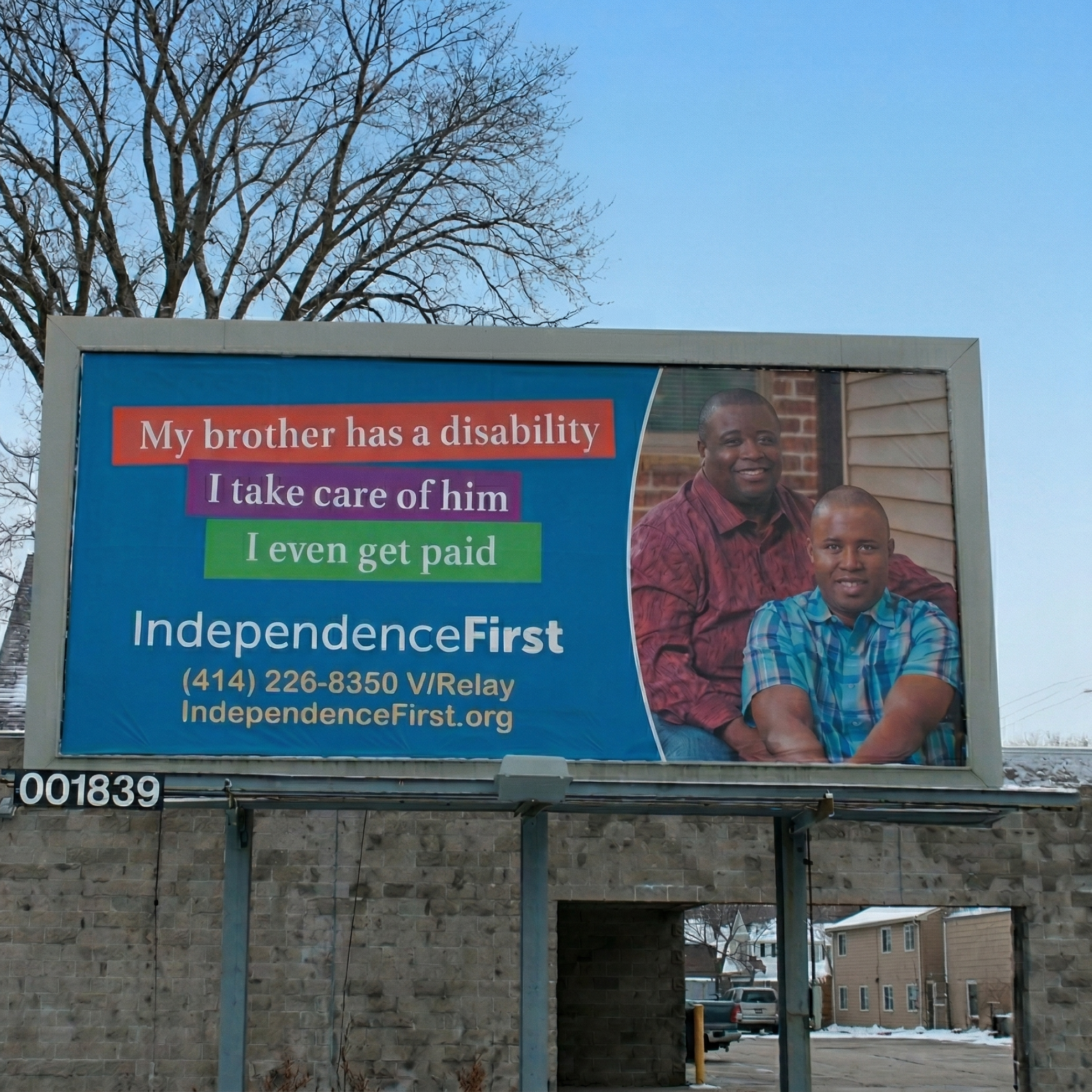
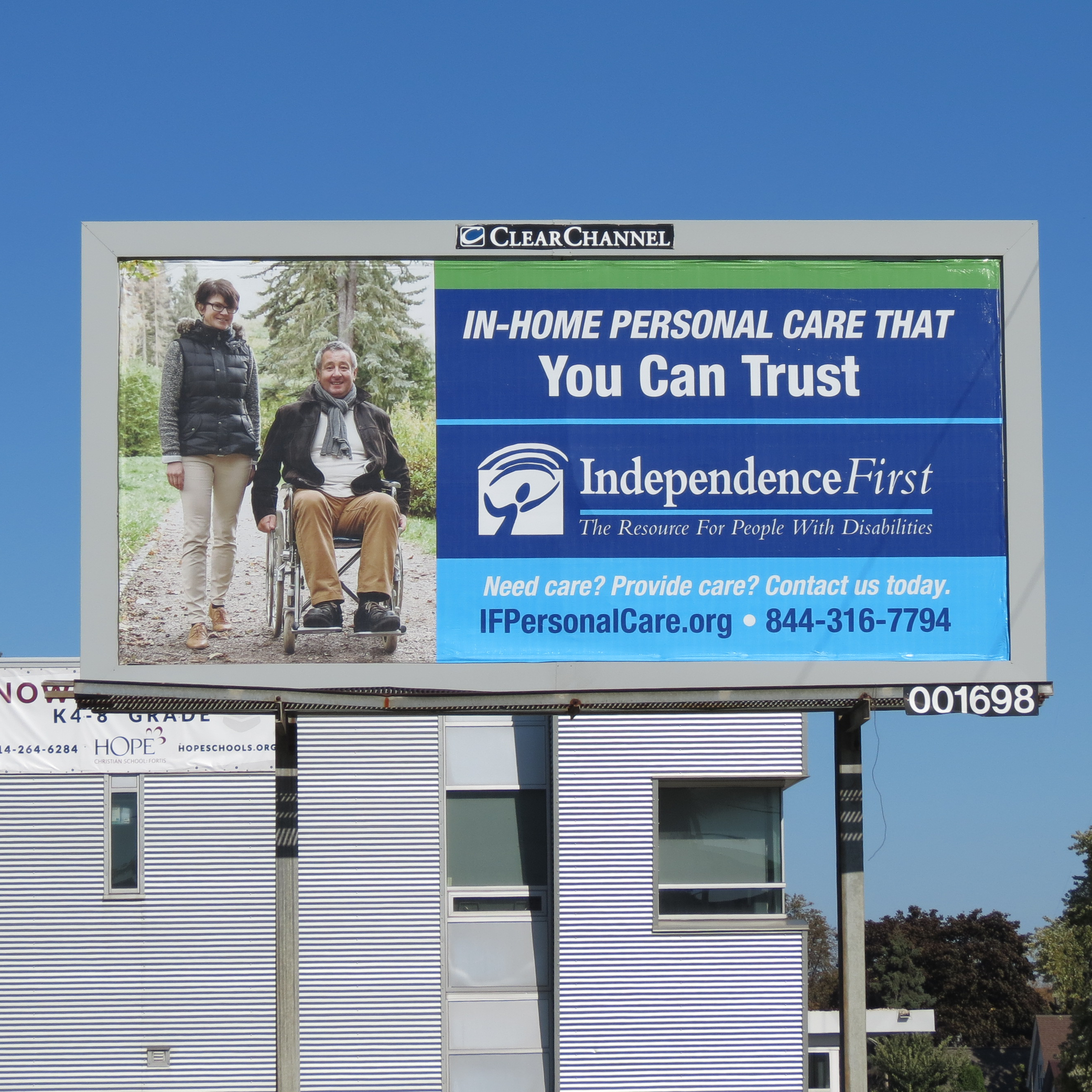
Previous awareness campaigns for the same program demonstrate how vendor-created creative can vary drastically when a brand hasn't performed sufficient visual development.
Preparing for an awareness campaign is the right moment to think about consistency
Independence First, an ILC serving people living with disabilities in Milwaukee and the surrounding counties, was preparing to launch an awareness campaign for a sub-brand program across digital and OOH.
Although they had access to creative services per vendor, they knew the importance of consistency in making their campaign effective. They also knew the importance of tailoring the campaign to each channel, making sure the messaging length and information density was appropriate for each placement.
Additionally, like most nonprofits, they needed the campaign messaging to serve several audiences, something that required a level of expertise that fell outside of their vendors’ offerings.
So the challenge was set: Independence First needed a campaign toolkit that would scale across ad placements from digital to OOH, be customizable across multiple audiences, and enable multiple vendors to execute a consistent brand look.
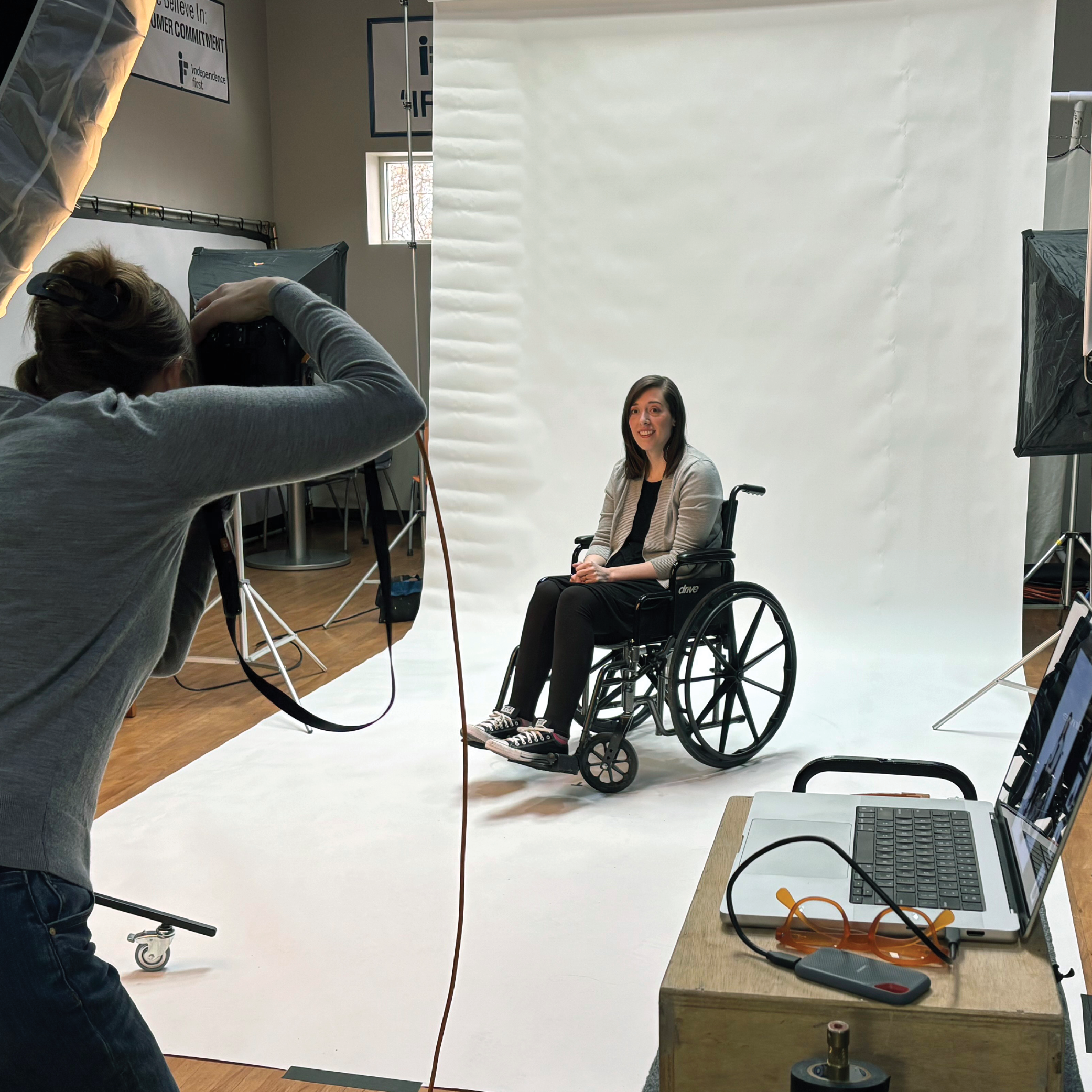
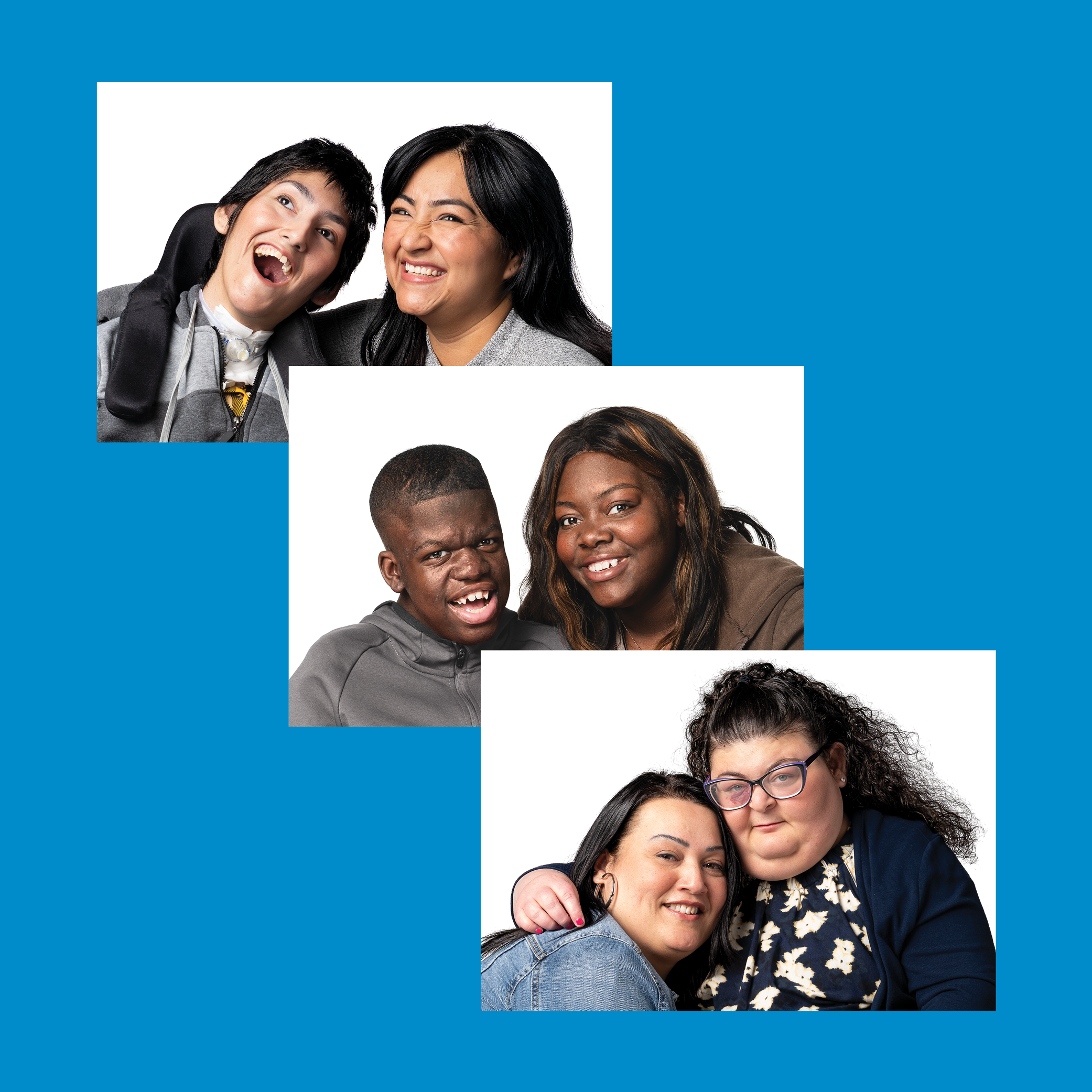
We shot custom photography on-site at Independence First featuring authentic consumer / caregiver pairs.
The components of an effective toolkit
Ravenwood Design Group stepped in to create the campaign toolkit, starting with a diagnostic phase to identify areas where Independence First’s brand could be strengthened, made more distinctive, and more functional.
After the diagnostic phase, RDG used the new brand look as a basis to create the tool kit in three major parts:
Custom photography. We partnered with Sara Stathas to capture authentic portraits for the campaign, featuring talent from the actual audience served by the program. The variety of portraits captured reflect the three significant campaign audiences.
Scaleable copy deck. We partnered with The Glowland to create a scaleable copy deck and custom messaging to reach each audience, giving Independence First a targeted library of ad copy they can use to create ads internally or share with vendors.
Ad templates. We developed campaign templates across a variety of scales and ratios to share with vendors, making it easy to execute consistent ads.
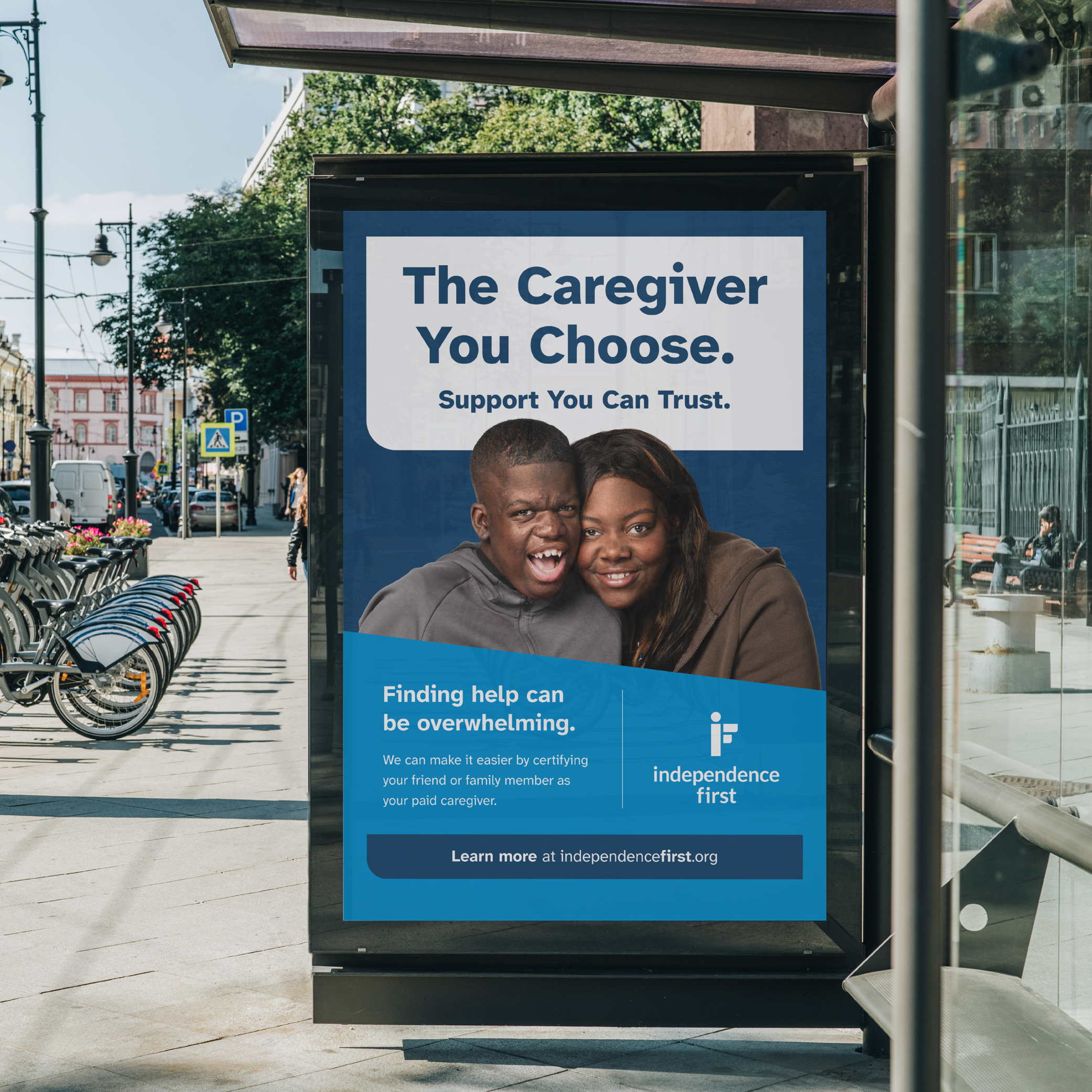
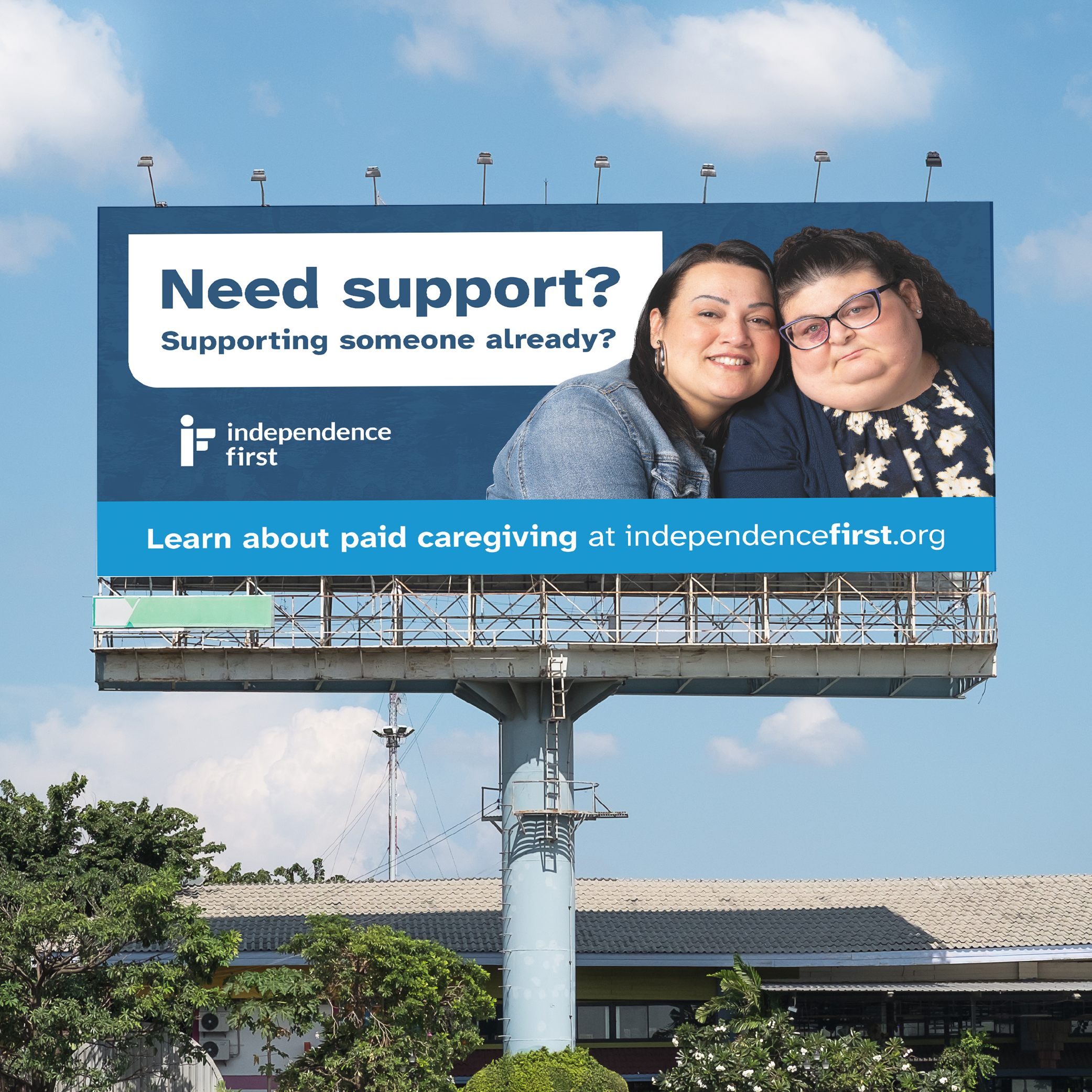
The campaign toolkit created consistency across the campaign while enabling the flexibility to customize the messaging per audience and placement.
What outcomes did the toolkit provide for Independence First?
Campaign consistency: Every vendor was able to produce creative that was on-brand, and on-message, enabling Independence First to maximize the cumulative effectiveness of their campaign impressions.
Campaign Flexibility: The toolkit made it easy to switch out images and messaging to target multiple audiences or customize copy based on channel.
Decentralized Design: Vendors were able to execute additional creative using approved assets, pulling from the image library and scaleable copy deck. Because vendors had the toolkit at their fingertips, production timelines could move faster– changes never needed to wait on IF’s internal team or a third-party designer.
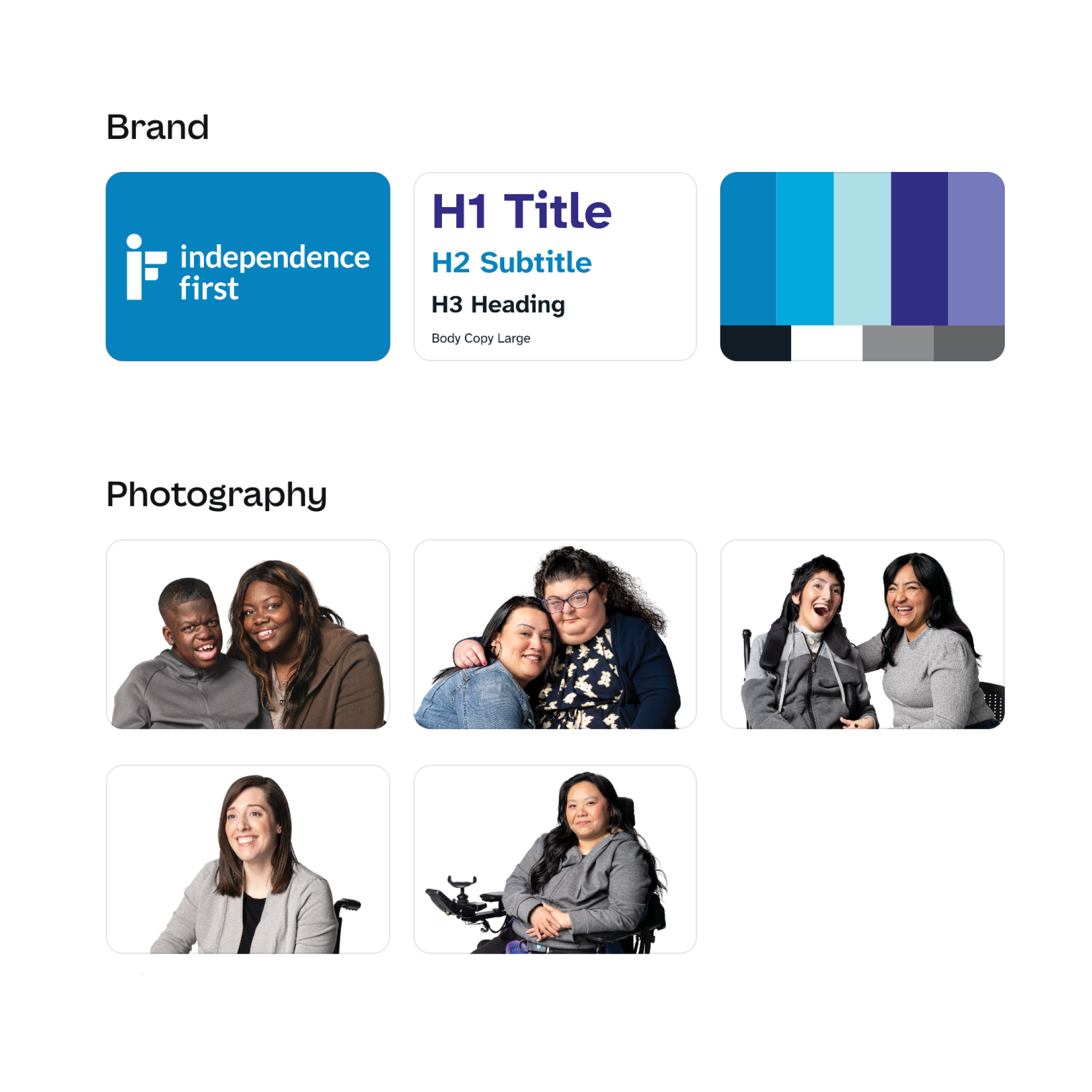
Independence First now has a library of assets and images that allows them to build on-brand communications quickly and confidently.
And ultimately: a stronger brand.
At every stage of the process, RDG had a goal of strengthening the brand beyond the lifecycle of this specific campaign. The work we did through the diagnostic phase helped inform design decisions, build consistency, and create a distinctive look that helps tell the Independence First brand story. We used the photoshoot as an opportunity to build out an evergreen image library, and we made sure that IF had access to their new assets and templates within a professionally organized Canva Brand Kit.
This campaign was personal for many members of the team who worked on it, because everyone has stories of needing care, or giving care, and the fact that Independence First enables people who need care to work directly with their friends and family is really significant. We feel fortunate to have done this work for them and to help bring awareness to this program.
Special thanks to Amelinda Burich, our photography talent, and the Independence First team.
Creative Direction & Strategy
Lydia Ravenwood
Photography
Sara Stathas
Messaging
Andrew Nelson
Leslie Rivers
Art Direction
Lydia Ravenwood
Sara Caron
Graphic Design
Quyen Tonnu
Lydia Ravenwood
Photo Retouching
Brandon Singer
Hair & Makeup
Teresa Sammarco
Wardrobe
Sara Caron
Photo Assistant
Rachel Herschberger
Production Assistant
Hannah Nelsen